
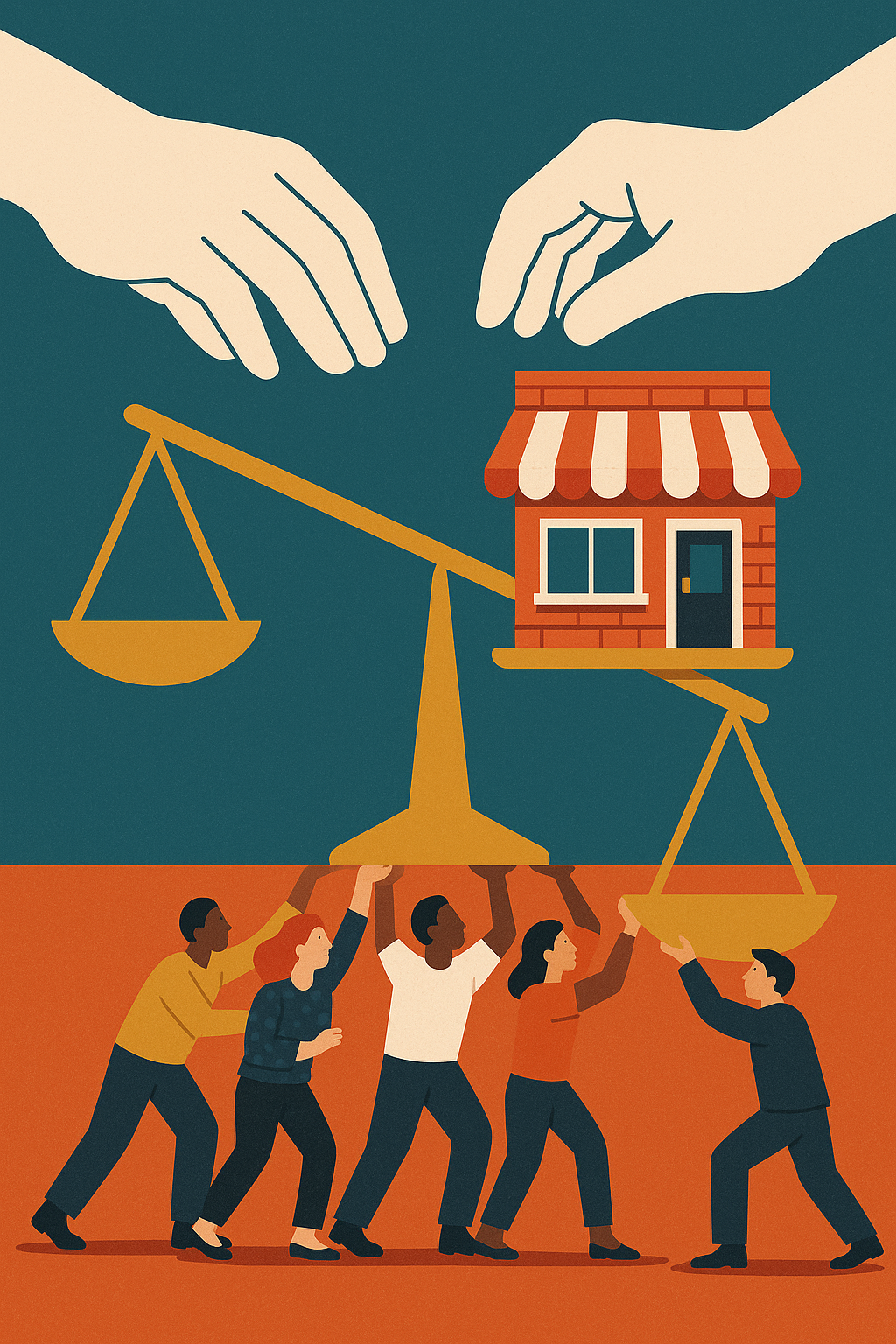
In today’s global economy, large corporations dominate nearly every aspect of modern life — from the food we eat and the media we consume to the technology we use and even the policies that shape our cities and neighborhoods. Their influence is vast, and their decisions often determine the rhythm of our society.
But as these giants have grown, something essential has weakened:
- local economic vitality,
- community interdependence, and
- the moral foundation of business.
💰 The Current State of Corporate Power
At the core of today’s corporate world is profit maximization. Publicly traded companies are designed to prioritize shareholder returns, often above social or environmental concerns. This focus has created tremendous wealth but also has serious consequences:
- Extreme inequality: A small fraction of people control a disproportionate share of resources.
- Environmental strain: Industrial growth often comes at the cost of pollution and resource depletion.
- Loss of local culture: Independent businesses and local traditions are replaced by uniform global brands.
- Worker alienation: Employees are treated as expendable, rather than valued contributors.
While large corporations bring efficiency and innovation, their scale can make it difficult to act with empathy, fairness, or long-term responsibility.
🌿 Why Local Businesses Matter
Strong local businesses are more than economic entities — they are anchors of community life. They bring several qualities that large corporations often cannot replicate:
1. Accountability and Trust
Local business owners interact directly with customers and employees. Their reputation depends on honesty, quality, and fairness. These personal relationships build trust and strengthen social bonds.
2. Economic Resilience
Communities with diverse small enterprises are more adaptable and less vulnerable to global market shocks. Local spending circulates wealth within neighborhoods, sustaining families and local institutions.
3. Meaningful Employment
Small businesses can treat workers as partners in success, rather than disposable costs. They create opportunities for people to develop skills, take initiative, and contribute to their community’s well-being.
4. Sustainable Practices
Local businesses often have a vested interest in protecting their environment and preserving cultural traditions. This creates a healthier, more sustainable economy that benefits everyone.
⚖️ How We Can Build a Balanced Economy
Rebalancing the economy isn’t about opposing corporations — it’s about creating a system where both large and small enterprises thrive ethically.
Here’s how communities and individuals can help:
1. Rethink Success
Measure success not just in profit, but in social impact, community well-being, and environmental sustainability.
2. Support Local Enterprise
Every purchase is a vote. Choosing locally owned businesses helps redirect wealth back into neighborhoods and empowers communities.
3. Encourage Skill and Education
Education is essential to creating a skilled workforce and socially responsible entrepreneurs. Support programs that teach not just technical skills, but also ethics, cooperation, and civic responsibility.
4. Promote Cooperative Models
Worker-owned businesses, cooperatives, and community-supported enterprises encourage shared ownership and collective responsibility, creating resilient local economies.
5. Advocate for Ethical Corporate Behavior
Large companies can innovate and scale solutions, but consumers, employees, and policymakers can influence them to act responsibly — emphasizing transparency, fairness, and long-term thinking.
🌅 Toward an Economy That Works for Everyone
When small businesses are strong, they do more than sell goods or services. They nurture relationships, distribute wealth fairly, and strengthen the moral and social fabric of communities.
Supporting them isn’t just an economic choice — it’s a commitment to fairness, resilience, and shared prosperity.
Corporations and small businesses don’t have to exist in opposition. By fostering ethical local enterprises alongside responsible corporate practices, we can create a balanced economy — one where innovation, prosperity, and human dignity grow together.


